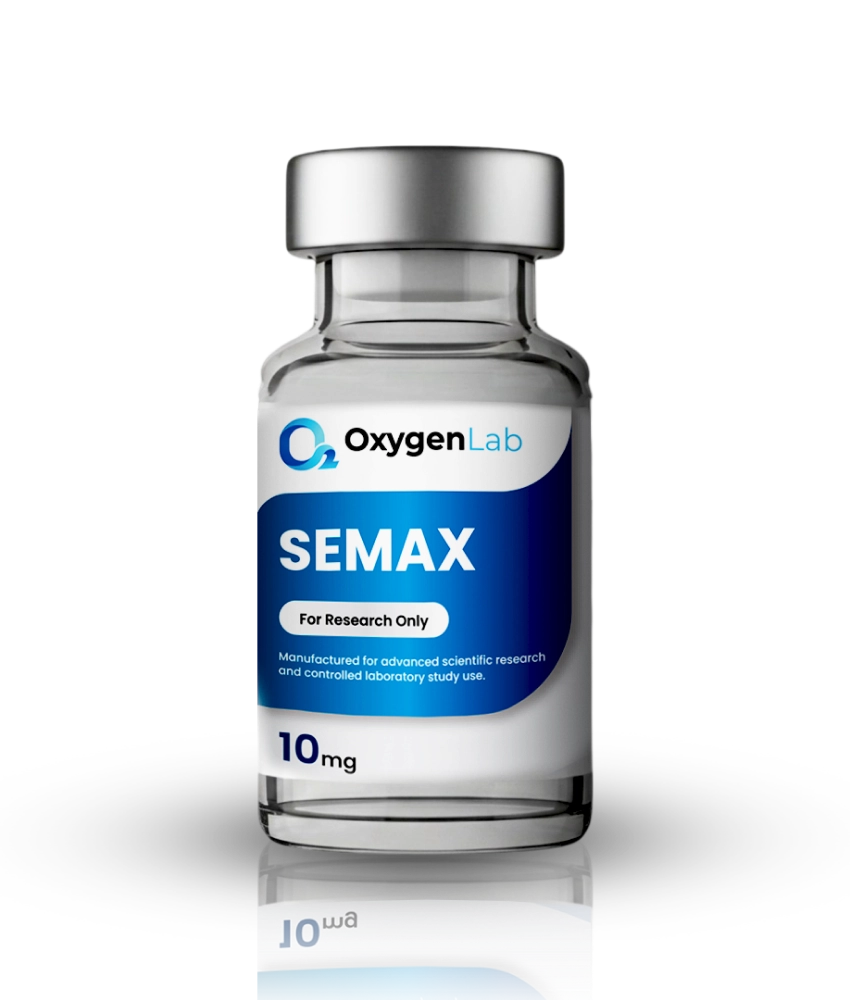

Peptides are among the most widely used tools in biochemical and cell-biology research. This introduction explains what research peptides are, how they are produced and how their quality is checked.
What is a peptide?
A peptide is a short chain of amino acids joined by peptide bonds. Chains of roughly 2 to 50 amino acids are usually called peptides; longer chains are proteins. The order of amino acids, the sequence, determines a peptide’s structure and how it interacts with other molecules. For example, BPC-157 has 15 amino acids, while thymosin beta-4 has 43.
Why researchers use synthetic peptides
Synthetic peptides let researchers study a defined sequence in isolation: how a signaling fragment binds a receptor, how a sequence behaves in a cell model, or how modifications change stability. Because the sequence is known exactly, results can be linked to a specific molecule.
How research peptides are made
1. Solid-phase peptide synthesis (SPPS)
Most research peptides are built by solid-phase synthesis: amino acids are added one at a time to a growing chain anchored to a resin bead, with protecting groups preventing unwanted reactions. When the chain is complete, it is cleaved from the resin and the protecting groups are removed.
2. Purification
The crude product contains the target peptide plus shorter or incompletely deprotected sequences. Preparative HPLC separates the target from these impurities.
3. Lyophilization
The purified peptide is freeze-dried into a stable powder. Our article on lyophilization explains why.
4. Testing
Each batch is analyzed to confirm identity (mass spectrometry) and purity (analytical HPLC), and the results are reported on a certificate of analysis.
What “research use only” means
Research peptides are supplied for laboratory and analytical work. They are not drugs, have not been evaluated by the FDA for safety or effectiveness in people, and are not for human or animal use. Reputable suppliers state this clearly and do not provide dosing or medical guidance.
Choosing a supplier
- Batch-specific COAs from an independent laboratory.
- Full specifications: sequence, molecular weight and form.
- Clear research-use-only policies.
- Proper storage and cold-chain handling.
New to the terminology? Our peptide glossary defines the common terms.
Frequently asked questions
What is the difference between a peptide and a protein?
Length. Peptides are short chains, typically under about 50 amino acids; proteins are longer and usually fold into complex structures.
Why are research peptides sold as a powder?
Freeze-dried (lyophilized) powder is far more stable than a solution, which makes storage and shipping practical.
Research use only. OxygenLab products are supplied for in-vitro laboratory research and analytical use only. They are not for human or animal use and are not intended to diagnose, treat, cure or prevent any disease. See our Legal & Compliance policy.
Lab tool: Working out solution concentration? Try the free OxygenLab Peptide Calculator — enter vial mass and diluent volume to get mg/mL, µg/mL and molarity.