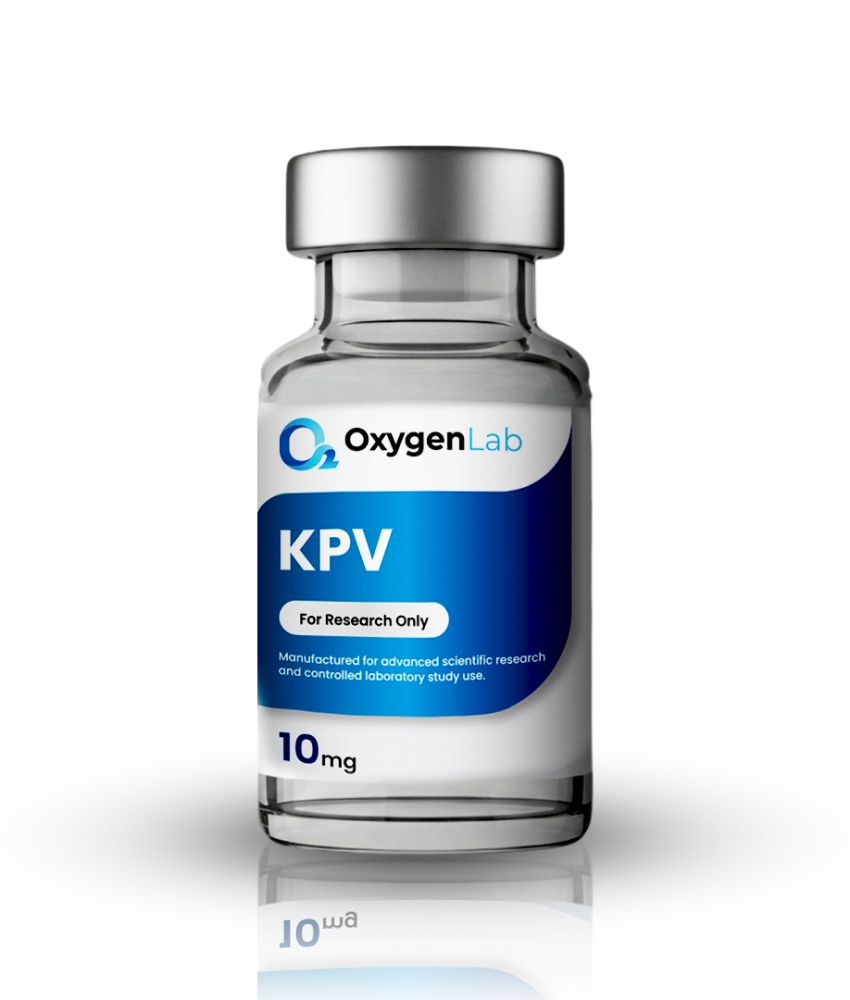
KPV is a short peptide that appears often in inflammation research. This overview covers what it is, where it comes from, how it has been studied, and its regulatory status. It is a scientific summary, not guidance on use.
Structure and origin
KPV is a tripeptide with the sequence Lys-Pro-Val (H-Lys-Pro-Val-OH). It corresponds to amino acids 11–13, the C-terminal end, of alpha-melanocyte-stimulating hormone (alpha-MSH). Its anti-inflammatory activity was first described by Hiltz and Lipton in 1989 (FASEB J, PMID 2550304). It is supplied for research as a lyophilized powder; specifications for our material are on the KPV product page.
How KPV has been studied
Published work on KPV is preclinical: cell-culture and animal models. Areas of investigation include:
- Intestinal inflammation and colitis models (Dalmasso et al., Gastroenterology, 2008, PMID 18061177).
- Mouse models of inflammatory bowel disease (Kannengiesser et al., Inflamm Bowel Dis, 2008, PMID 18092346).
- Nanoparticle-based oral delivery in ulcerative colitis models (Xiao et al., Mol Ther, 2017, PMID 28143741).
- Signalling in keratinocytes (skin cells) (Elliott et al., J Invest Dermatol, 2004, PMID 15102092).
- Corneal wound-healing models (Bonfiglio et al., Exp Eye Res, 2006, PMID 16965771).
In its 2026 review, the FDA said it did not identify clinical studies of KPV in humans. Findings from cell and animal models do not establish effects in humans.
Regulatory status
- KPV is not approved by the U.S. Food and Drug Administration for any use.
- In July 2026 the FDA Pharmacy Compounding Advisory Committee voted 8–6 to recommend KPV for the list of substances pharmacies may compound. The vote is non-binding and FDA rulemaking is still required.
- KPV is not named on the World Anti-Doping Agency prohibited list; non-approved substances may fall under WADA class S0. Check Global DRO for current status.
Laboratories should confirm the current status in their jurisdiction before beginning work.
Quality considerations for researchers
Results depend on the material used, so identity and purity data matter. Check that each batch comes with a certificate of analysis showing mass-spectrometry identity and HPLC purity, and that the batch number matches your vial. Store lyophilized material as described in our storage guide.
Frequently asked questions
Is KPV the same as alpha-MSH?
No. KPV is the last three of alpha-MSH’s thirteen amino acids.
How many amino acids are in KPV?
Three: lysine, proline and valine.
Has KPV been studied in humans?
The FDA reported in 2026 that it found no clinical studies of KPV in humans.
Research use only. OxygenLab products are supplied for in-vitro laboratory research and analytical use only. They are not for human or animal use and are not intended to diagnose, treat, cure or prevent any disease. See our Legal & Compliance policy.
Lab tool: Working out solution concentration? Try the free OxygenLab Peptide Calculator — enter vial mass and diluent volume to get mg/mL, µg/mL and molarity.