
Description
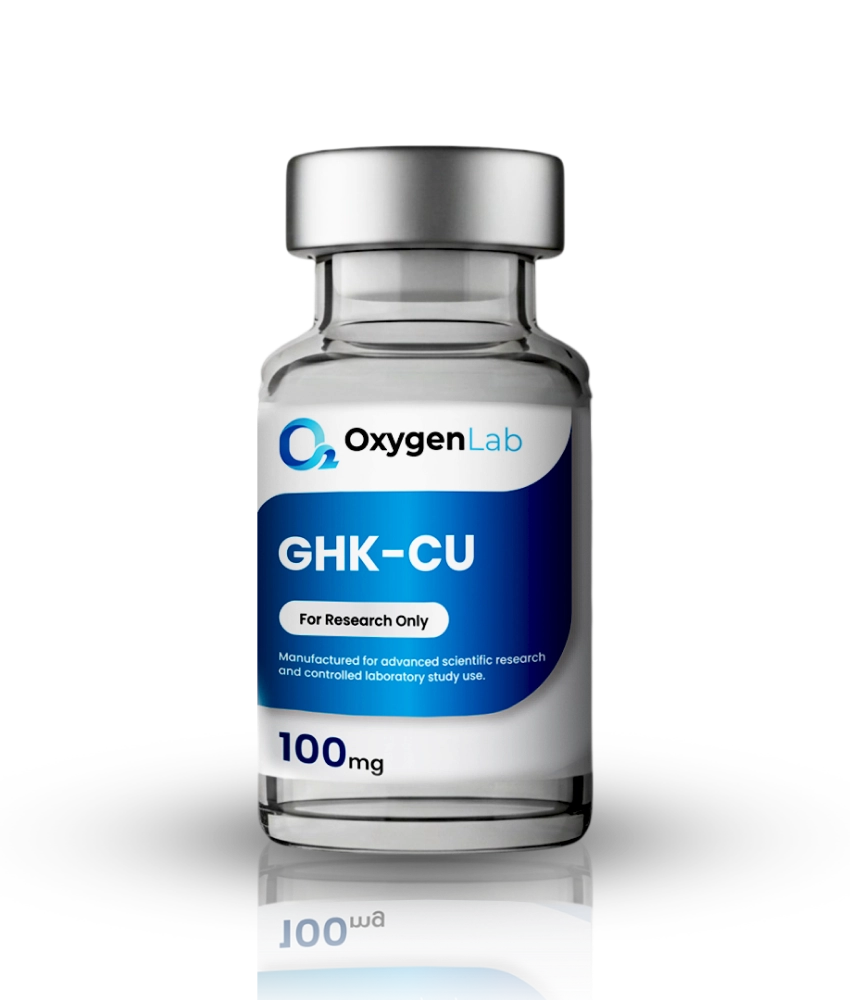
GHK-Cu is the copper(II) complex of the naturally occurring tripeptide glycyl-L-histidyl-L-lysine. OxygenLab supplies GHK-Cu as a lyophilized powder (100 mg per vial), third-party tested; published certificates are on our COA page.
GHK-Cu Specifications
| Compound | GHK-Cu |
|---|---|
| Sequence / structure | Gly-His-Lys : Cu(II) complex (tripeptide) |
| Molecular formula | C14H23CuN6O4+ |
| Molecular weight | 402.9 g/mol |
| CAS number | 89030-95-5 |
| Form | Lyophilized powder |
| Amount per vial | 100 mg |
| Purity | Third-party tested by HPLC and MS (COA available on request) |
Formula, molecular weight and CAS number per PubChem.
Research Overview
GHK-Cu is studied in gene-expression, extracellular-matrix and antioxidant research. Laboratory work has examined its effect on collagen-related pathways and on the expression of large sets of genes.
It is also widely investigated as a cosmetic ingredient in topical formulation research.
Selected Research References
- Regenerative and Protective Actions of the GHK-Cu Peptide in the Light of the New Gene Data, Int J Mol Sci, 2018.
- Liposomes as Carriers of GHK-Cu Tripeptide for Cosmetic Application, Pharmaceutics, 2023.
GHK-Cu: Research Background
The tripeptide Gly-His-Lys (GHK) was first isolated from human plasma by Loren Pickart in 1973. It binds copper(II) with high affinity, forming the GHK-Cu complex supplied here.
Fibroblast culture studies from the late 1980s reported effects on collagen and glycosaminoglycan synthesis, and later Connectivity Map analyses examined how GHK associates with expression changes across large sets of human genes.
GHK-Cu is also widely studied in formulation science, including liposome and topical delivery research, and in copper coordination chemistry.
What the GHK-Cu COA Confirms
OxygenLab products are tested by independent third-party laboratories. HPLC reports purity as the main peak’s share of total peak area, and mass spectrometry confirms identity against the expected molecular weight of 402.9 g/mol (the copper complex). Published certificates are on our COA page, and others are available on request; match the lot number on your vial to the report before use in an experiment.
Related Research Compounds
Laboratories working with GHK-Cu often also reference: GLOW Blend, BPC-157, TB-500 (Thymosin Beta-4).
More Questions About GHK-Cu
What does GHK stand for?
Glycyl-L-histidyl-L-lysine, the three amino acids of the peptide.
Why does GHK-Cu come in different vial sizes?
The compound and testing are identical; 50 mg and 100 mg vials suit different laboratory batch sizes.
Storage and Handling
- Store lyophilized powder at -20°C for long-term storage, protected from light and moisture.
- Short-term storage at 2–8°C is acceptable for unopened vials.
- Allow the vial to reach room temperature before opening to limit moisture uptake.
- Record batch and lot numbers for every preparation.
Frequently Asked Questions
How is the purity of GHK-Cu verified?
OxygenLab products are tested by independent third-party laboratories for identity and purity (HPLC and mass spectrometry). A certificate for this product is available on request; contact us. Published certificates are on our COA page.
How should lyophilized GHK-Cu be stored?
Store unopened vials at -20°C, protected from light and moisture. Short-term storage at 2–8°C is acceptable.
Is GHK-Cu intended for human use?
No. GHK-Cu is sold strictly for laboratory research use and is not for human or animal consumption.
Related Research Guides
- How to read a peptide certificate of analysis
- What HPLC purity means for research peptides
- How to store lyophilized peptides
Research use only. This product is supplied for in-vitro laboratory research and analytical use only. It is not for human or animal use, and not intended to diagnose, treat, cure or prevent any disease. See our Legal & Compliance policy.
Reviews
There are no reviews yet.