
Description
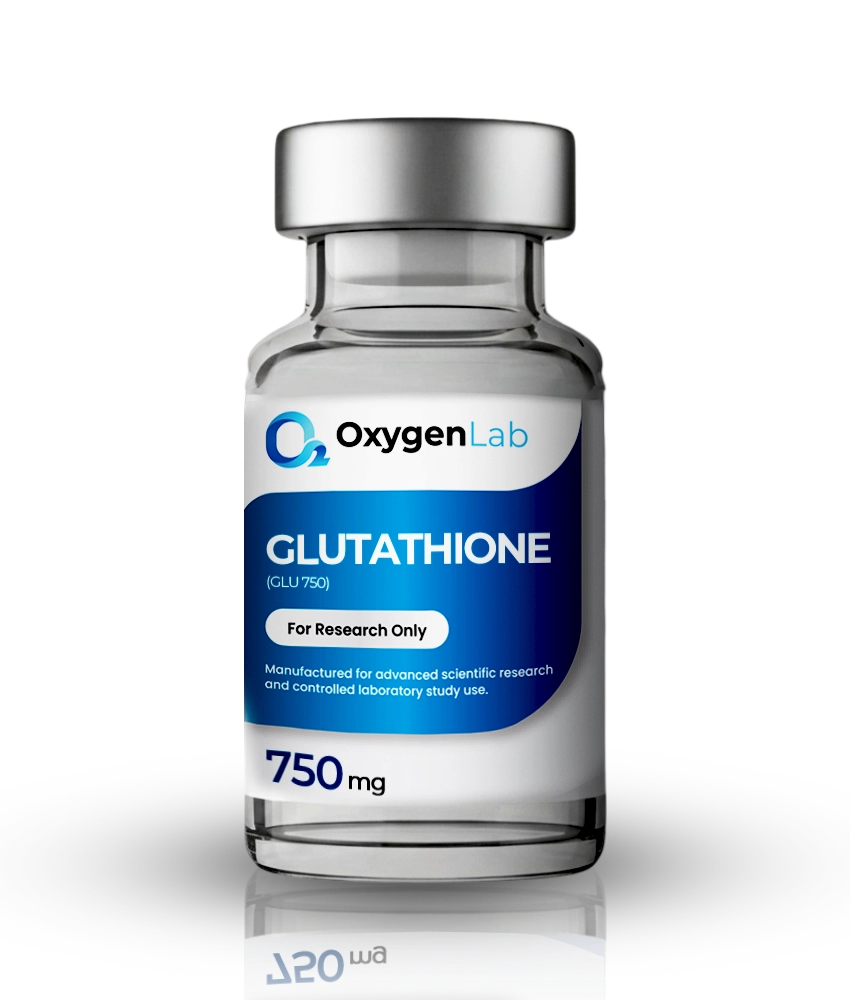
Glutathione (GSH) is a tripeptide that acts as the main intracellular antioxidant and redox buffer in most cells. OxygenLab supplies Glutathione as a lyophilized powder (750 mg per vial), third-party tested; published certificates are on our COA page.
Glutathione Specifications
| Compound | Glutathione |
|---|---|
| Sequence / structure | γ-Glu-Cys-Gly (reduced tripeptide) |
| Molecular formula | C10H17N3O6S |
| Molecular weight | 307.3 g/mol |
| CAS number | 70-18-8 |
| Form | Lyophilized powder |
| Amount per vial | 750 mg |
| Purity | Third-party tested by HPLC and MS (COA available on request) |
Formula, molecular weight and CAS number per PubChem.
Research Overview
Glutathione is studied in oxidative-stress and redox biology research, including its synthesis, its role in mitochondria and glutathione-dependent enzymes.
It is a standard reference compound in antioxidant and detoxification pathway studies.
Selected Research References
- Glutathione synthesis, Biochim Biophys Acta, 2013.
- Mitochondrial Glutathione in Cellular Redox Homeostasis and Disease Manifestation, Int J Mol Sci, 2024.
Glutathione: Research Background
Glutathione (GSH) is synthesised inside cells in two ATP-dependent steps: glutamate-cysteine ligase joins glutamate and cysteine through an unusual γ-peptide bond (the rate-limiting step), and glutathione synthetase then adds glycine. The γ-linkage protects the molecule from most ordinary peptidases.
In redox research, the ratio of reduced to oxidised glutathione (GSH/GSSG) is one of the most widely used markers of cellular oxidative state. Glutathione peroxidases use GSH to reduce peroxides, glutathione S-transferases conjugate it to electrophiles, and glutathione reductase regenerates GSH from GSSG using NADPH.
Mitochondria do not synthesise glutathione themselves; they import it from the cytosol, which is why mitochondrial GSH pools are studied separately in models of oxidative stress.
What the Glutathione COA Confirms
OxygenLab products are tested by independent third-party laboratories. HPLC reports purity as the main peak’s share of total peak area, and mass spectrometry confirms identity against the expected molecular weight of 307.3 g/mol. Published certificates are on our COA page, and others are available on request; match the lot number on your vial to the report before use in an experiment.
Related Research Compounds
Laboratories working with Glutathione often also reference: NAD+, MOTS-c.
More Questions About Glutathione
Why is glutathione called a γ-peptide?
Glutamate is linked through its side-chain (γ) carboxyl group rather than the usual α-carboxyl, which makes the molecule resistant to most peptidases.
What is the GSH/GSSG ratio used for?
It is a standard laboratory readout of cellular redox status in oxidative-stress research models.
Storage and Handling
- Store lyophilized powder at -20°C for long-term storage, protected from light and moisture.
- Short-term storage at 2–8°C is acceptable for unopened vials.
- Allow the vial to reach room temperature before opening to limit moisture uptake.
- Record batch and lot numbers for every preparation.
Frequently Asked Questions
How is the purity of Glutathione verified?
OxygenLab products are tested by independent third-party laboratories for identity and purity (HPLC and mass spectrometry). A certificate for this product is available on request; contact us. Published certificates are on our COA page.
How should lyophilized Glutathione be stored?
Store unopened vials at -20°C, protected from light and moisture. Short-term storage at 2–8°C is acceptable.
Is Glutathione intended for human use?
No. Glutathione is sold strictly for laboratory research use and is not for human or animal consumption.
Related Research Guides
- How to read a peptide certificate of analysis
- What HPLC purity means for research peptides
- How to store lyophilized peptides
Research use only. This product is supplied for in-vitro laboratory research and analytical use only. It is not for human or animal use, and not intended to diagnose, treat, cure or prevent any disease. See our Legal & Compliance policy.
Reviews
There are no reviews yet.